ERC-7857: Standard untuk Intelligent NFT
ERC-7857 adalah standar NFT baru yang memperluas ERC-721 dengan kemampuan untuk menyimpan dan mengelola metadata terenkripsi, memungkinkan transfer kepemilikan yang aman untuk aset AI.
Overview
Mengapa Butuh Standard Baru?
ERC-721 tradisional memiliki keterbatasan:
| Limitasi ERC-721 | Solusi ERC-7857 |
|---|---|
| Metadata publik | Encrypted metadata |
| Tidak ada mekanisme re-encrypt | Secure re-encryption on transfer |
| Tidak ada verification | Oracle-based verification |
| Tidak ada usage control | Built-in authorization system |
Core Features ERC-7857
- Encrypted Metadata - AI configurations tersimpan terenkripsi
- Secure Re-encryption - Data di-re-encrypt saat transfer
- Oracle Verification - Third-party memverifikasi legitimacy
- Authorized Usage - Sistem rental/license built-in
Alur Kerja ERC-7857
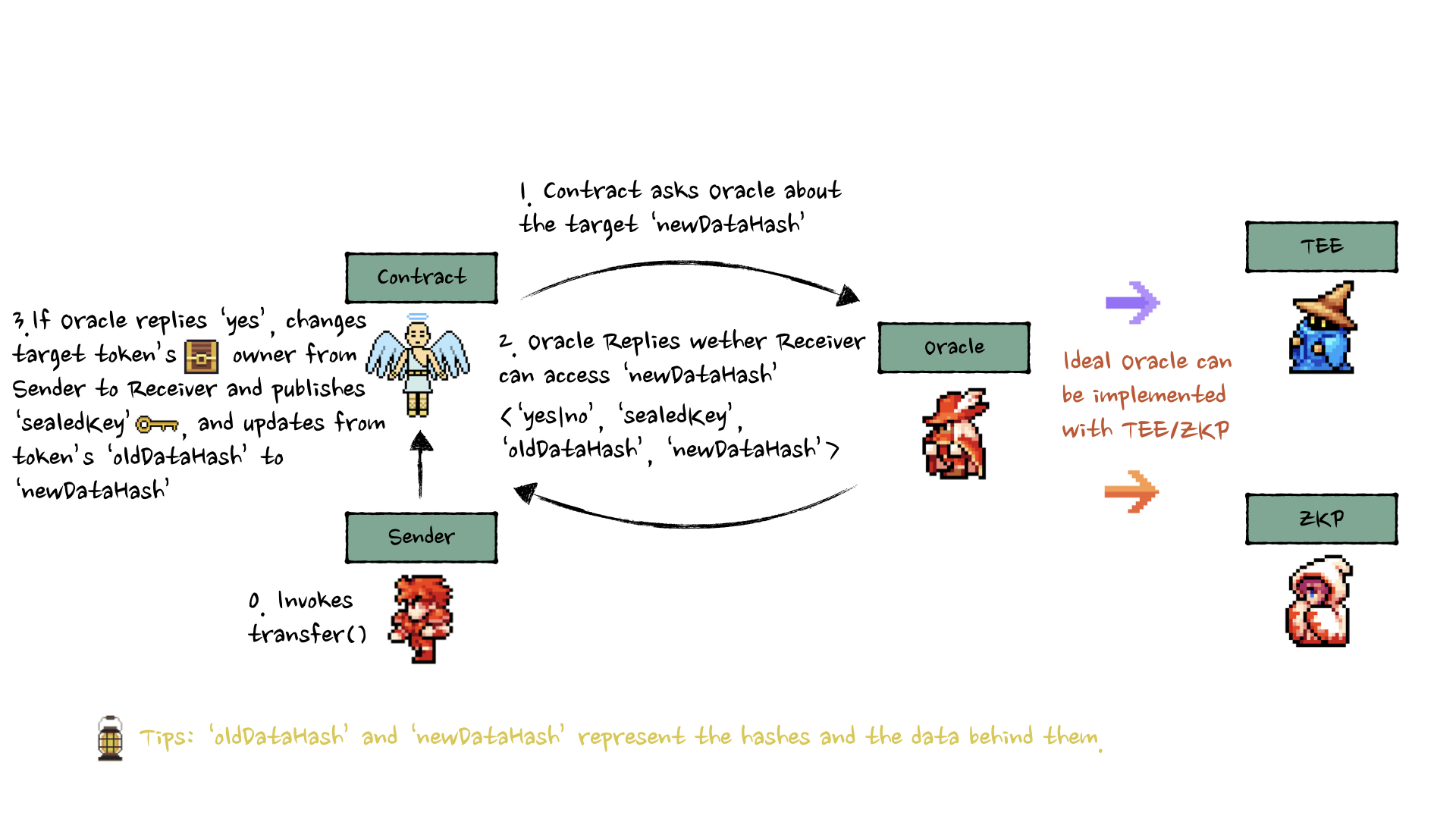
Step-by-Step Flow
1. MINT
   Creator → Encrypt AI config → Store on-chain/off-chain → Mint NFT

2. USE
   Owner → Decrypt config → Run AI inference → Get response

3. AUTHORIZE
   Owner → Grant usage → User can use (tidak perlu transfer ownership)

4. TRANSFER
   Seller → Initiate transfer → Oracle re-encrypts → Buyer receives
Interface Specification (Official)
Berikut adalah interface resmi dari 0G Agent NFT Repository:
IERC7857 Interface
// SPDX-License-Identifier: GPL-3.0
pragma solidity ^0.8.20;

interface IERC7857 {
    /// @notice Event saat address di-approve untuk transfer token
    event Approval(
        address indexed _from,
        address indexed _to,
        uint256 indexed _tokenId
    );

    /// @notice Event saat address di-approve untuk semua token
    event ApprovalForAll(
        address indexed _owner,
        address indexed _operator,
        bool _approved
    );

    /// @notice Event saat address di-authorize untuk menggunakan token
    event Authorization(
        address indexed _from,
        address indexed _to,
        uint256 indexed _tokenId
    );

    /// @notice Event saat authorization di-revoke
    event AuthorizationRevoked(
        address indexed _from,
        address indexed _to,
        uint256 indexed _tokenId
    );

    /// @notice Event saat token ditransfer
    event Transferred(
        uint256 _tokenId,
        address indexed _from,
        address indexed _to
    );

    /// @notice Event saat token di-clone
    event Cloned(
        uint256 indexed _tokenId,
        uint256 indexed _newTokenId,
        address _from,
        address _to
    );

    /// @notice Event saat sealed key di-publish
    event PublishedSealedKey(
        address indexed _to,
        uint256 indexed _tokenId,
        bytes[] _sealedKeys
    );

    /// @notice Get verifier contract
    function verifier() external view returns (IERC7857DataVerifier);

    /// @notice Get admin address
    function admin() external view returns (address);

    /// @notice Set admin baru
    function setAdmin(address newAdmin) external;

    /// @notice Transfer dengan re-encryption proof
    function iTransfer(
        address _to,
        uint256 _tokenId,
        TransferValidityProof[] calldata _proofs
    ) external;

    /// @notice Clone token ke address baru
    function iClone(
        address _to,
        uint256 _tokenId,
        TransferValidityProof[] calldata _proofs
    ) external returns (uint256 _newTokenId);

    /// @notice Authorize user untuk menggunakan token
    function authorizeUsage(uint256 _tokenId, address _user) external;

    /// @notice Revoke authorization
    function revokeAuthorization(uint256 _tokenId, address _user) external;

    /// @notice Get token owner
    function ownerOf(uint256 _tokenId) external view returns (address);

    /// @notice Get authorized users
    function authorizedUsersOf(uint256 _tokenId) external view returns (address[] memory);
}
IERC7857Metadata Interface
// SPDX-License-Identifier: MIT
pragma solidity ^0.8.20;

struct IntelligentData {
    string dataDescription;  // Deskripsi data
    bytes32 dataHash;        // Hash dari encrypted data
}

interface IERC7857Metadata {
    /// @notice Get nama NFT collection
    function name() external view returns (string memory);

    /// @notice Get symbol NFT collection
    function symbol() external view returns (string memory);

    /// @notice Get intelligent data dari token
    function intelligentDatasOf(uint256 _tokenId)
        external view returns (IntelligentData[] memory);
}
Data Verifier Interface
// SPDX-License-Identifier: MIT
pragma solidity ^0.8.20;

/// @notice Tipe oracle: TEE atau ZKP
enum OracleType {
    TEE,
    ZKP
}

/// @notice Access proof - signature dari receiver
struct AccessProof {
    bytes32 oldDataHash;
    bytes32 newDataHash;
    bytes nonce;
    bytes encryptedPubKey;
    bytes proof;
}

/// @notice Ownership proof - dari oracle (TEE/ZKP)
struct OwnershipProof {
    OracleType oracleType;
    bytes32 oldDataHash;
    bytes32 newDataHash;
    bytes sealedKey;
    bytes encryptedPubKey;
    bytes nonce;
    bytes proof;
}

struct TransferValidityProof {
    AccessProof accessProof;
    OwnershipProof ownershipProof;
}

interface IERC7857DataVerifier {
    /// @notice Verify transfer validity
    function verifyTransferValidity(
        TransferValidityProof[] calldata _proofs
    ) external returns (TransferValidityProofOutput[] memory);
}
Oracle Implementations
ERC-7857 mendukung dua jenis oracle untuk re-encryption:
1. TEE Implementation (Trusted Execution Environment)
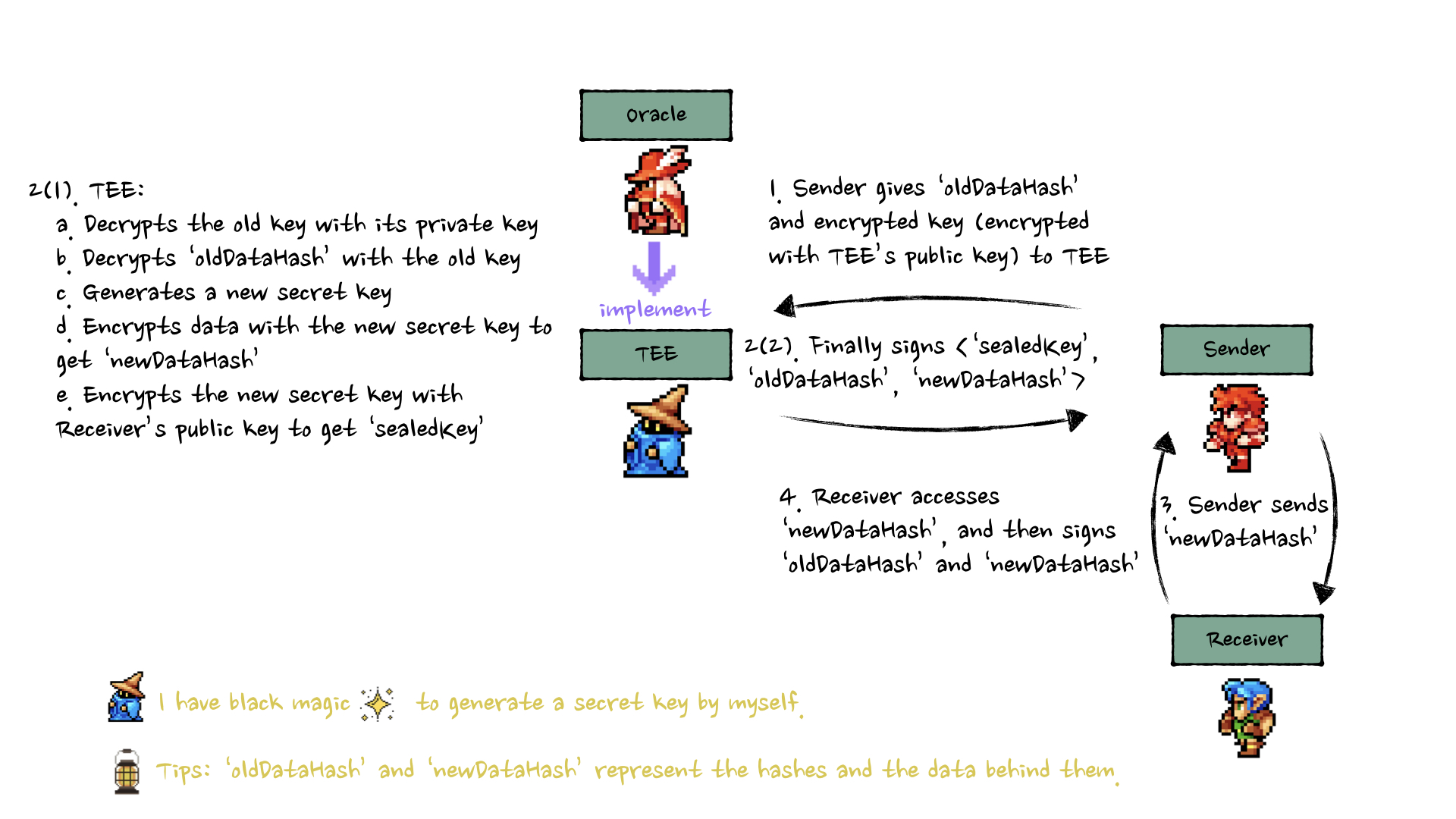
Cara Kerja TEE:
- Sender mengirim
oldDataHash, data terenkripsi, dan key ke TEE - TEE decrypt dengan private key-nya
- TEE generate new key dan re-encrypt data
- TEE output
sealedKey,oldDataHash, dannewDataHash
Keuntungan TEE:
- Hardware-level security
- Fast processing
- TEE bisa generate new key securely
Kekurangan:
- Bergantung pada hardware vendor
- Potential side-channel attacks
2. ZKP Implementation (Zero-Knowledge Proof)
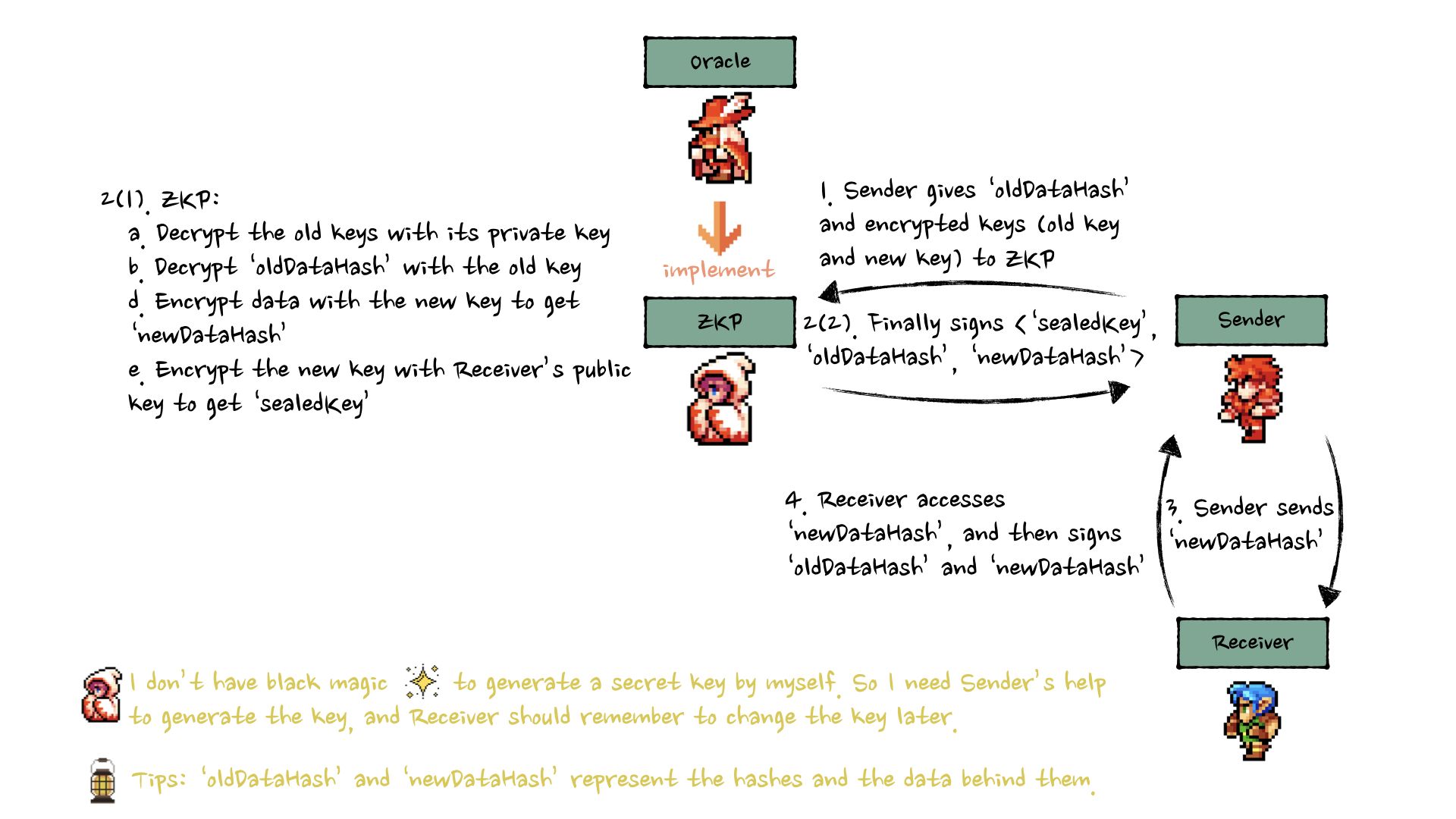
Cara Kerja ZKP:
- Generate proof bahwa re-encryption valid
- Verifier confirm proof tanpa melihat data asli
- Smart contract verify proof on-chain
Keuntungan ZKP:
- Trustless (no trusted third party)
- Mathematically provable security
- Fully decentralized
Kekurangan:
- Receiver harus ganti key saat update berikutnya
- Computationally expensive
Perbandingan TEE vs ZKP
| Aspek | TEE | ZKP |
|---|---|---|
| Trust Model | Hardware vendor | Math |
| Speed | Fast | Slower |
| Key Generation | Secure new key | Receiver must change |
| Decentralization | Partial | Full |
| Best For | High throughput | Maximum trust |
Full Flow
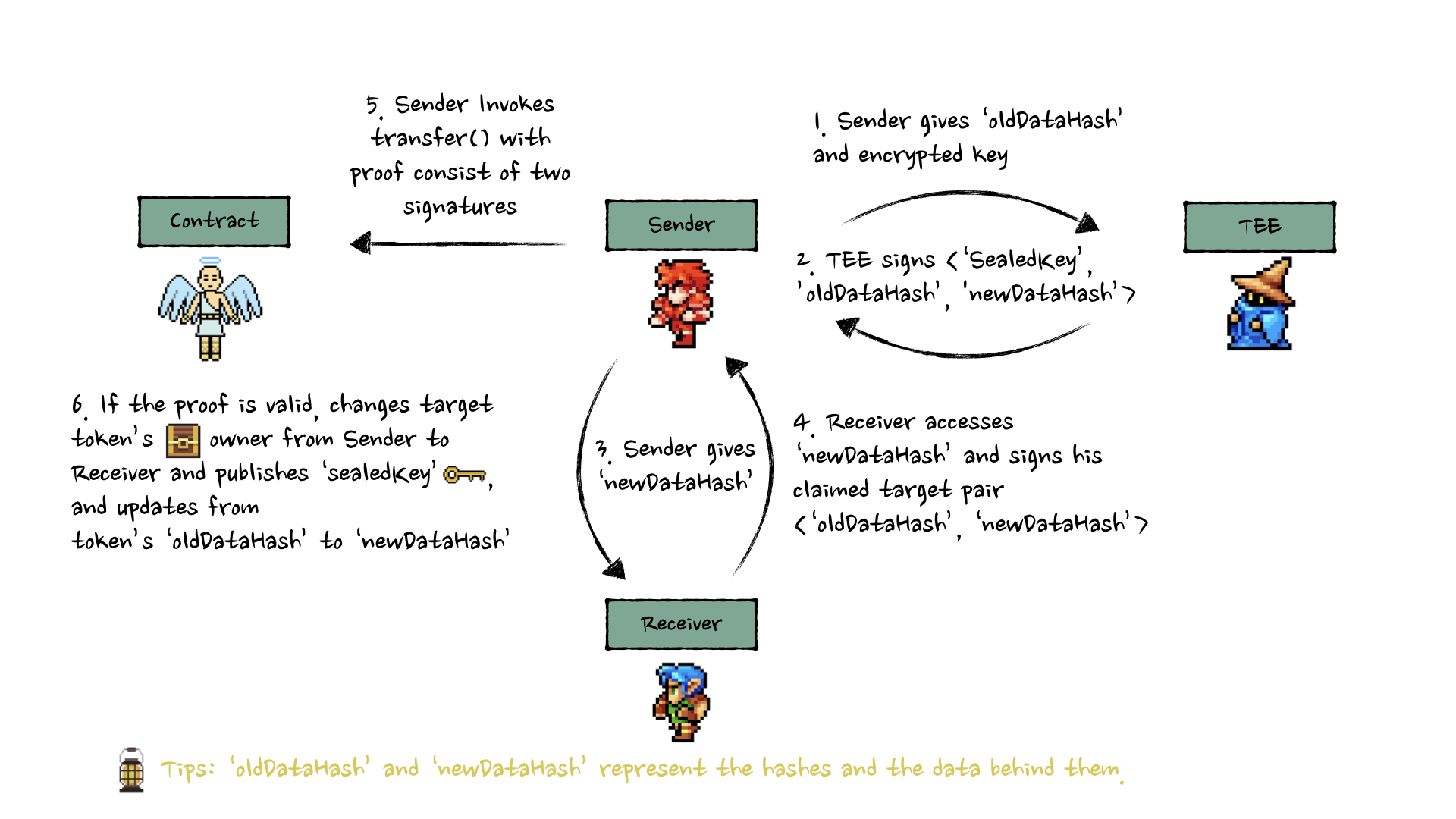
Alur lengkap transfer:
- Sender interaksi dengan TEE/ZKP untuk dapat signature verifikasi
- Sender minta signature dari Receiver untuk konfirmasi akses
- Sender submit kedua signature ke
transfer() - Contract verify signatures dan update state
- Receiver decrypt data dengan key dari
sealedKey
AgentNFT Contract
Implementasi lengkap ERC-7857 di 0G:
// SPDX-License-Identifier: MIT
pragma solidity ^0.8.20;

contract AgentNFT is
    AccessControlUpgradeable,
    ReentrancyGuardUpgradeable,
    PausableUpgradeable,
    IERC7857,
    IERC7857Metadata
{
    struct TokenData {
        address owner;
        address[] authorizedUsers;
        address approvedUser;
        IntelligentData[] iDatas;
    }

    uint256 public constant MAX_AUTHORIZED_USERS = 100;

    // Mint INFT baru
    function mint(
        IntelligentData[] calldata iDatas,
        address to
    ) public payable virtual returns (uint256 tokenId);

    // Transfer dengan proof
    function iTransfer(
        address to,
        uint256 tokenId,
        TransferValidityProof[] calldata proofs
    ) public virtual;

    // Clone token
    function iClone(
        address to,
        uint256 tokenId,
        TransferValidityProof[] calldata proofs
    ) public virtual returns (uint256);

    // Authorize user untuk menggunakan token
    function authorizeUsage(uint256 tokenId, address to) public virtual;

    // Batch authorize multiple users
    function batchAuthorizeUsage(
        uint256 tokenId,
        address[] calldata users
    ) public virtual;

    // Revoke authorization
    function revokeAuthorization(uint256 tokenId, address user) public virtual;

    // Clear semua authorized users
    function clearAuthorizedUsers(uint256 tokenId) public virtual;

    // Get authorized users
    function authorizedUsersOf(uint256 tokenId)
        public view virtual returns (address[] memory);

    // Get intelligent data
    function intelligentDatasOf(uint256 tokenId)
        public view virtual returns (IntelligentData[] memory);
}
Key Functions Explained
1. mint() - Membuat INFT Baru
function mint(
    IntelligentData[] calldata iDatas,
    address to
) public payable returns (uint256 tokenId) {
    require(to != address(0), "Zero address");
    require(iDatas.length > 0, "Empty data array");

    tokenId = nextTokenId++;
    tokens[tokenId].owner = to;

    for (uint i = 0; i < iDatas.length; i++) {
        tokens[tokenId].iDatas.push(iDatas[i]);
    }

    emit Minted(tokenId, msg.sender, to);
}
2. authorizeUsage() - Grant Usage Rights
function authorizeUsage(uint256 tokenId, address to) public {
    require(to != address(0), "Zero address");
    require(tokens[tokenId].owner == msg.sender, "Not owner");
    require(
        tokens[tokenId].authorizedUsers.length < MAX_AUTHORIZED_USERS,
        "Too many authorized users"
    );

    tokens[tokenId].authorizedUsers.push(to);
    emit Authorization(msg.sender, to, tokenId);
}
3. revokeAuthorization() - Revoke Usage Rights
function revokeAuthorization(uint256 tokenId, address user) public {
    require(tokens[tokenId].owner == msg.sender, "Not owner");

    address[] storage authorizedUsers = tokens[tokenId].authorizedUsers;
    for (uint i = 0; i < authorizedUsers.length; i++) {
        if (authorizedUsers[i] == user) {
            authorizedUsers[i] = authorizedUsers[authorizedUsers.length - 1];
            authorizedUsers.pop();
            break;
        }
    }

    emit AuthorizationRevoked(msg.sender, user, tokenId);
}
Security Considerations
1. Key Management
- Private keys HARUS aman
- Gunakan hardware wallet untuk high-value INFTs
- Backup encrypted, bukan plaintext
2. Oracle Trust
- Pilih oracle implementation sesuai kebutuhan
- TEE untuk speed, ZKP untuk trustlessness
3. Authorization Limits
- Max 100 authorized users per token
- Revoke yang tidak digunakan
- Monitor usage patterns
Summary
| Component | Purpose |
|---|---|
| IntelligentData | Store encrypted AI config hash |
| TransferValidityProof | Verify re-encryption on transfer |
| authorizeUsage | Grant usage without ownership transfer |
| Oracle (TEE/ZKP) | Secure re-encryption mechanism |
Lanjut ke Implementasi
Sekarang kamu sudah paham standard ERC-7857, lanjut ke Integration Guide untuk mulai coding dengan contract resmi!